Neon, Vinyl, and Community

Updated: May 27
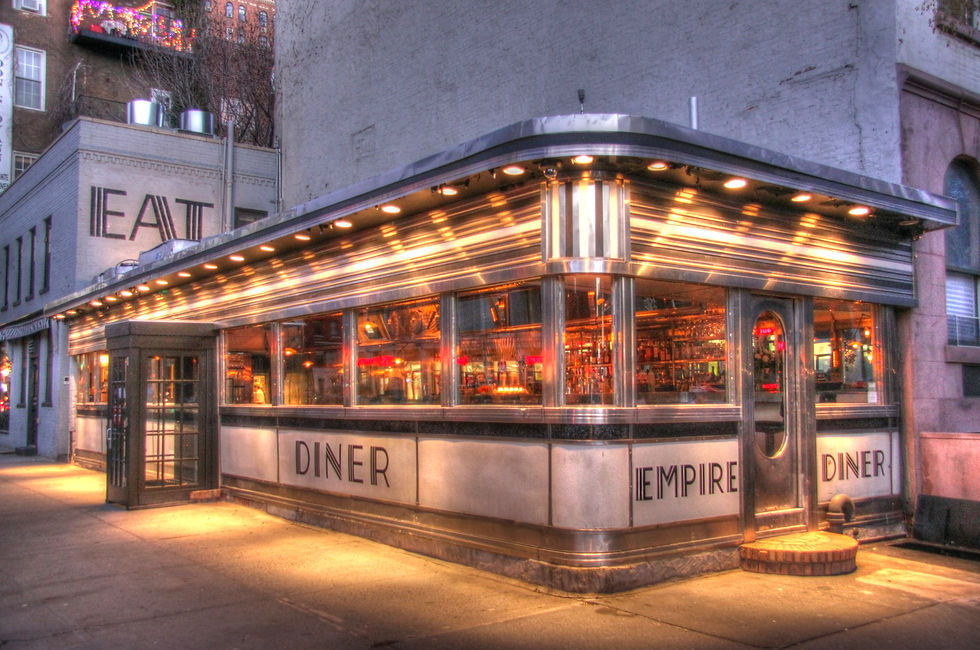
“Order up!” Two bills currently wending their way through the New Jersey State Legislature aim to provide financial relief to the state's family-run diners. It is a localized fight in the state, dubbed the “diner capital of the world,” but it has nationwide resonance.
Across the U.S., the classic diner has long served as a quintessential "third place"—that invaluable social anchor outside of home and work. Here, townies sit side-by-side at counters and in vinyl booths, catching up with each other over homestyle meals and endless coffee refills. But as overhead costs spike, these cultural landmarks are facing economic pressures like never before.

Explaining the urgent need to protect this heritage, NJ State Senator Paul Moriarty recently noted, “Diners, and specifically historic diners, are a cornerstone of our great state... They are part of our culture and our history, and we have a duty to help them thrive.”
We couldn’t agree more – along with neighborhood libraries, family-owned diners and dives are our favorite local gathering places.
Here’s a look back at how simple late-night lunch wagons evolved into diners, the icons of American roadside culture.

Horse-Drawn Beginnings (1872): In Providence, Rhode Island, Walter Scott began selling sandwiches and coffee out of a horse-drawn freight wagon to night-shift workers. This "night lunch wagon" sparked a massive trend across New England.

Move to Steel and Rails (1920s): As cities grew, these wagons grew too large to move. Operators began buying abandoned railroad cars and old trolley cars, converting them into cheap, stationary eateries. The word "diner" emerged as a shortened version of "dining car."

Chrome and Neon Boom (1930s–1940s): Diners evolved into the gleaming icons we recognize today. Prefabricated by manufacturers in New Jersey, Massachusetts, and New York, they were shipped to busy roadsides. They adopted "Streamline Moderne" architecture: stainless steel, neon lights, porcelain panels, and large panoramic windows meant to mimic futuristic trains.

Post War (1950s- ): Over the decades, Greek immigrants heavily influenced the diner landscape, particularly in the Northeast, expanding menus to the massive, multi-page book of options we see today.

Oldest Diner Still Open: The title for the oldest continuously operating diner in the United States belongs to Frank’s Diner in Kenosha, Wisconsin, which has served customers out of its classic, railcar-style structure for 100 years, and is still going strong. Try Frank’s Famous Garbage Plate!
Find a Diner Near You
There are a few diner finder apps out there, along with Yelp and Eater, but we have found that Google Maps is the easiest to use – just search for “diners” on any map view. Google Maps has access to the locations of more than 7,000 diners in the U.S.
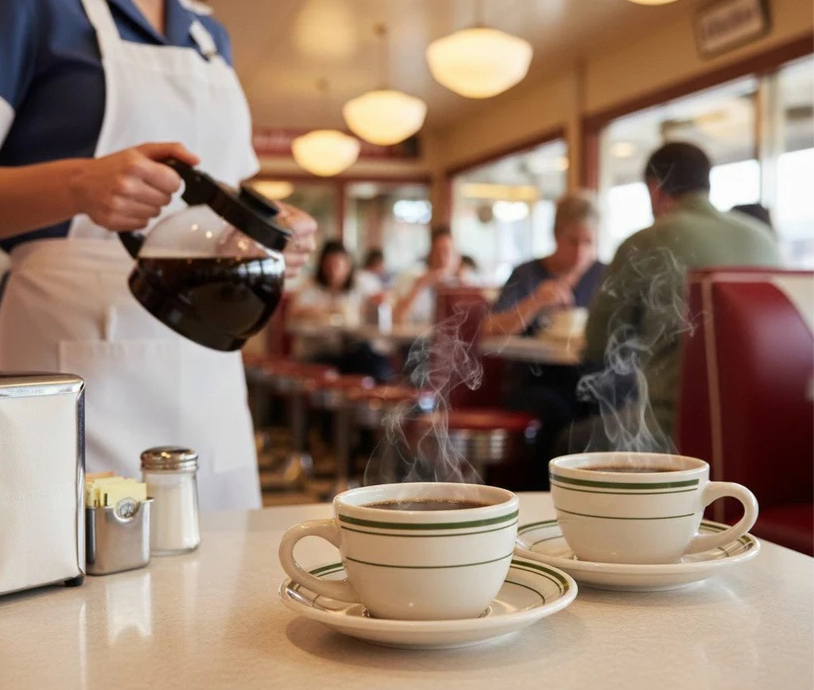
Photos (from top): Empire Diner, 210 10th Avenue, New York City, by Peter Bond on Unsplash; Summit Diner, 1 Union Place, Summit, New Jersey, by Robert Sietsema/Eater NY; Night lunch wagon, interior; Americanbusinesshistory.org; Mickey’s Diner, 36 West 9th Street, St. Paul, Minnesota, by John Margolies via Wikimedia Commons; Tilt’n Diner, 61 Laconia Road, Tilton, New Hampshire/Getty Images; Owner Demosthenis “Demos” Galaktiadis at his White House Restaurant, 3172 Peachtree Road N.W., Atlanta, Georgia, by Sara Hanna Photography; Frank's Diner owners Julie Rittmiller and Kevin Ervin. Authentic diner-style coffee cups and saucers are available to purchaase from historycompany.com.
Please Like, Comment, and share with other diner-philes you know – Thanks! 😊


Diner coffee is always the best!